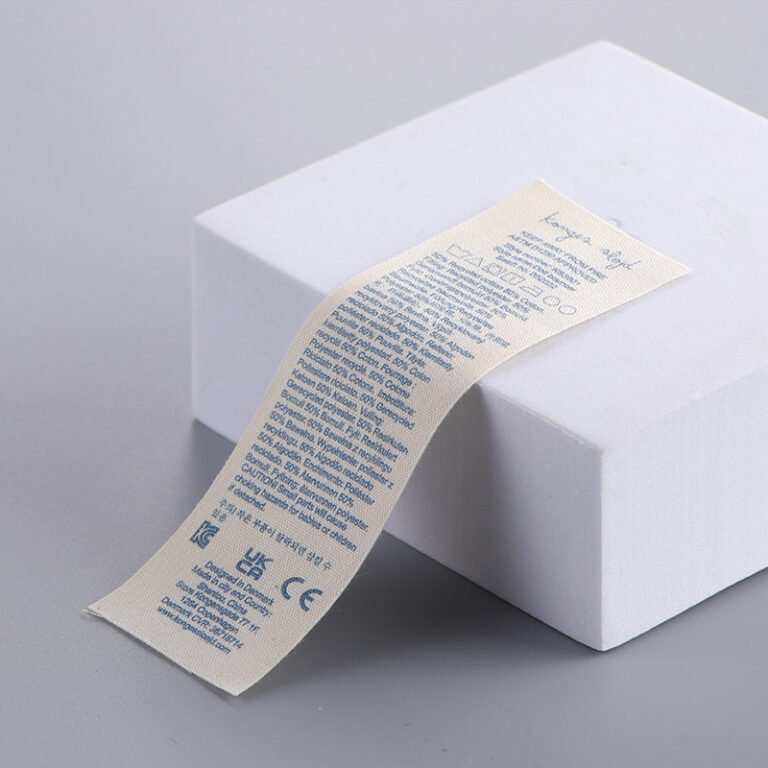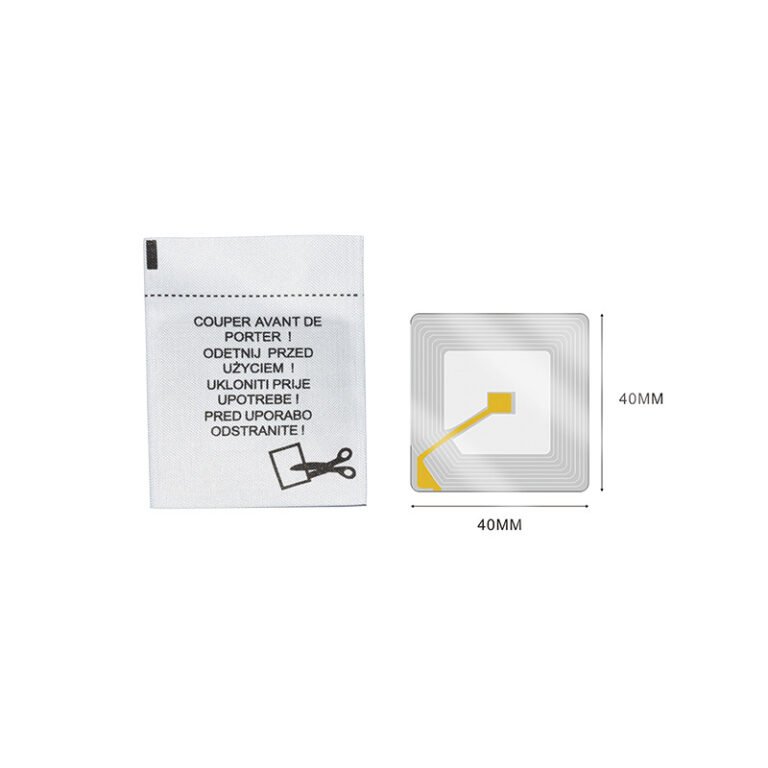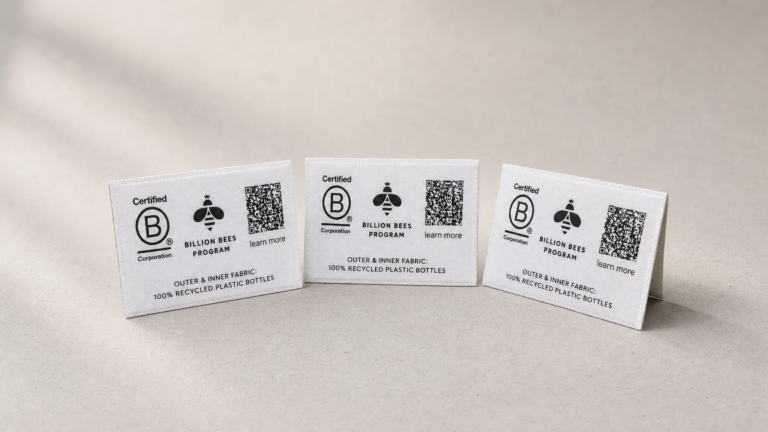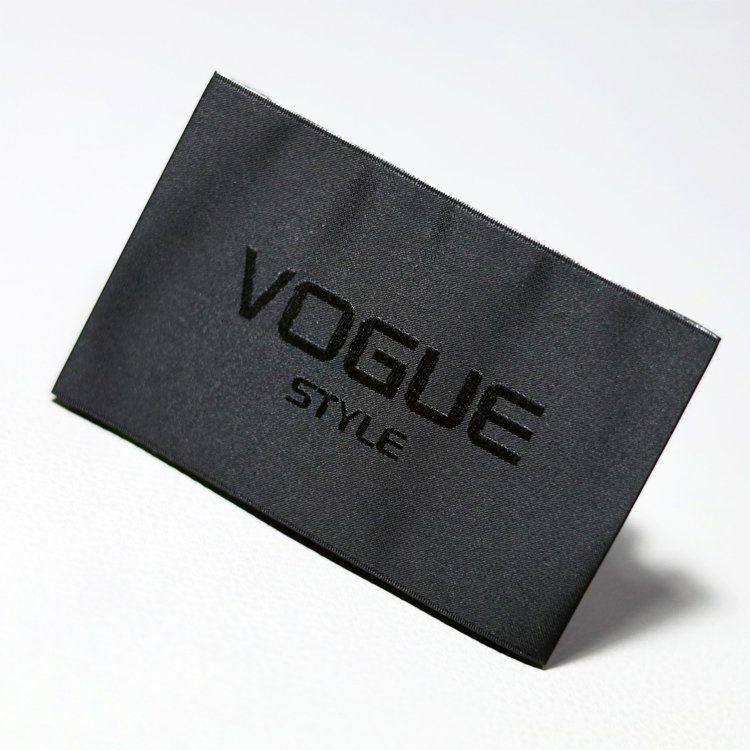
Custom woven labels do more than display a brand name. They influence how a garment looks, feels, and performs after repeated wear and washing. A good label starts with four connected decisions: material, weave density, fold type, and edge finish. The right combination depends on the artwork, label position, garment construction, comfort requirements, care conditions, and budget. Buyers who provide a complete specification receive more accurate quotations, better samples, and more consistent bulk production. This guide explains the main choices in practical terms.
Choose the Right Woven Label Material
Polyester yarn is widely used for custom woven labels because it supports fine detail, stable color, wash resistance, and efficient production. It works for neck labels, side-seam labels, size tabs, patches, and many other garment applications. When a sustainability claim is required, recycled polyester may be considered, but buyers should request evidence that clearly identifies the recycled content and the products covered.
Cotton can create a softer, more natural appearance, although the visual detail and edge performance may differ from polyester. The best option depends on whether the brand prioritizes a crisp logo, a handcrafted look, skin comfort, recycled input, or a particular care requirement. Do not select material from appearance alone.
Ask the supplier for yarn composition, colorfastness results, washing conditions, dimensional stability, and any relevant chemical-safety documentation. OEKO-TEX lists printed and woven labels among textile accessories covered by its buying guidance. If certification matters, verify that the certificate is valid and that its scope covers the supplied product rather than assuming that every item from the factory is included.
Match Weave Density to the Artwork
Weave density affects how clearly a label can reproduce lettering, fine lines, gradients, and small symbols. A higher-density weave generally provides a smoother surface and sharper detail, making it suitable for premium branding and complex artwork. However, greater density is not automatically better. Simple logos may look excellent with a standard weave, while very fine artwork can become unclear if the label is too small.
Begin by reviewing the logo at the actual production size. Thin strokes, tiny text, close letter spacing, and subtle color differences may need adjustment. A supplier should prepare a woven simulation or sample, but the buyer should still check whether the brand name remains readable from a normal viewing distance.
Limit unnecessary colors and use strong contrast between the background and text. The reverse side, border, and yarn transitions can also affect the final appearance. For very small care information or variable data, a printed label may be more suitable than a woven one. The goal is not to force every design into one production method; it is to choose the method that preserves clarity and brand consistency.
Select the Best Fold for Garment Construction
The fold determines how the label is attached and how it sits against the garment. A straight-cut label has no fold and can be sewn on all sides or used as a flat patch. It is suitable when the full label should sit directly on the fabric. Edge finishing is important because rough edges can reduce comfort.
An end-fold label has both short ends folded inward. It lies flat and is commonly sewn at the left and right sides. This style works well for neck branding and external applications where a clean edge is visible. A center-fold label is folded in half, creating a loop that can be inserted into a seam. It offers front and back surfaces for branding, size, origin, or short care information.
A mitre-fold label has angled folded ends and is often used as a hanging loop, while a Manhattan fold adds a finished top section to a loop-style label. Before ordering, show the supplier where the label will be sewn and provide the finished dimensions—not only the dimensions before folding. Also specify seam allowance, fold direction, and which side must face outward.
Decide on Edge Finish, Backing, and Final Quality
Edge finish influences appearance, durability, and comfort. Heat-cut edges can help seal synthetic yarns, while ultrasonic cutting may produce a clean edge for suitable constructions. Woven selvage edges are created during weaving and can feel smooth, but availability depends on the label design and production setup. Buyers should evaluate the actual sample against the skin if the label will be placed at the neck or waistband.
Additional options include iron-on, pressure-sensitive adhesive, or sew-on backing. Adhesive can support positioning or specific end uses, but its performance must be tested against the garment fabric, washing process, heat, and expected product life. A backing that works on one fabric may fail on another. Sew-on construction is often the most dependable option for long-term garment use.
Before bulk approval, inspect logo accuracy, color, finished size, folds, edge comfort, stitch placement, and wash performance. Keep one approved sample as the reference standard. Your purchase specification should state material, recycled-content claim if applicable, yarn colors, weave density, fold, finished dimensions, seam allowance, edge finish, backing, testing needs, packaging, and acceptable tolerances.
WandeTextile develops custom woven labels for apparel, accessories, sportswear, and packaging applications. Explore WandeTextile’s labels and trims or send your artwork, intended placement, garment material, and care conditions to request a production-ready sample.
References: OEKO-TEX: STANDARD 100 Buying Guide; Textile Exchange: Standards FAQs; Dutch Label Shop: Complete Woven Label Guide.